
How ETFs reshaped the Bitcoin cycle
The introduction of spot Bitcoin ETFs has fundamentally altered the market's structural dynamics, shifting the primary driver of price action from retail speculation to institutional absorption. This transition is evident in on-chain metrics that track the movement of assets between exchanges and wallets. Where previous cycles were defined by rapid retail inflows and subsequent panic selling, the 2026 data reveals a more stable, albeit slower, accumulation pattern driven by regulated financial products.
On-chain evidence supports this structural shift. The MVRV Z-Score, which measures the ratio of market value to realized value, has shown reduced volatility compared to historical norms. This dampening effect suggests that the "exchange float"—the supply of Bitcoin readily available for immediate sale—is being absorbed by long-term holders and institutional custodians rather than short-term traders. As ETF sponsors hold assets in cold storage, the liquid supply on exchanges has tightened, reducing the market's sensitivity to small-scale sell pressure.
While early 2026 saw weakened ETF flows, recent trends indicate a stabilization in demand. This stabilization is not driven by the viral, FOMO-led rallies of the past, but by steady allocation from traditional finance portfolios. The result is a market that experiences deeper, more prolonged corrections but recovers with greater consistency. Understanding this shift is critical for navigating the current landscape, as the old rules of retail-driven cycles no longer apply with the same force.
The correlation between ETF inflows and price action has become a more reliable indicator of market direction. Rather than reacting to social media sentiment, the market now responds to the net flow of capital into regulated vehicles. This change has created a more mature, albeit less explosive, market environment where institutional behavior dictates the broader trend.
Tracking exchange supply drainage
Institutional adoption has fundamentally altered the liquidity dynamics of the cryptocurrency market. As spot Bitcoin ETFs absorb daily inflows, they act as a structural liquidity sink, pulling assets from centralized exchanges into cold storage and self-custody solutions. This inverse relationship between ETF inflows and exchange reserves is a primary on-chain metric for assessing market health.
When institutional capital flows into ETFs, the corresponding Bitcoin is typically removed from exchange balances. This drainage reduces the immediate sell-side pressure available to retail traders and market makers. Consequently, on-chain metrics such as exchange reserves drop while MVRV (Market Value to Realized Value) ratios stabilize, indicating that the asset is being held rather than traded. This shift suggests a move from speculative trading to long-term institutional holding.
The tightening of on-chain liquidity means that smaller inflows can have a outsized impact on price discovery. With fewer coins available on exchanges, the market becomes more sensitive to new demand. This structural change reduces the volatility typically associated with retail-driven pumps and dumps, replacing it with a slower, more sustained accumulation phase driven by institutional balance sheets.
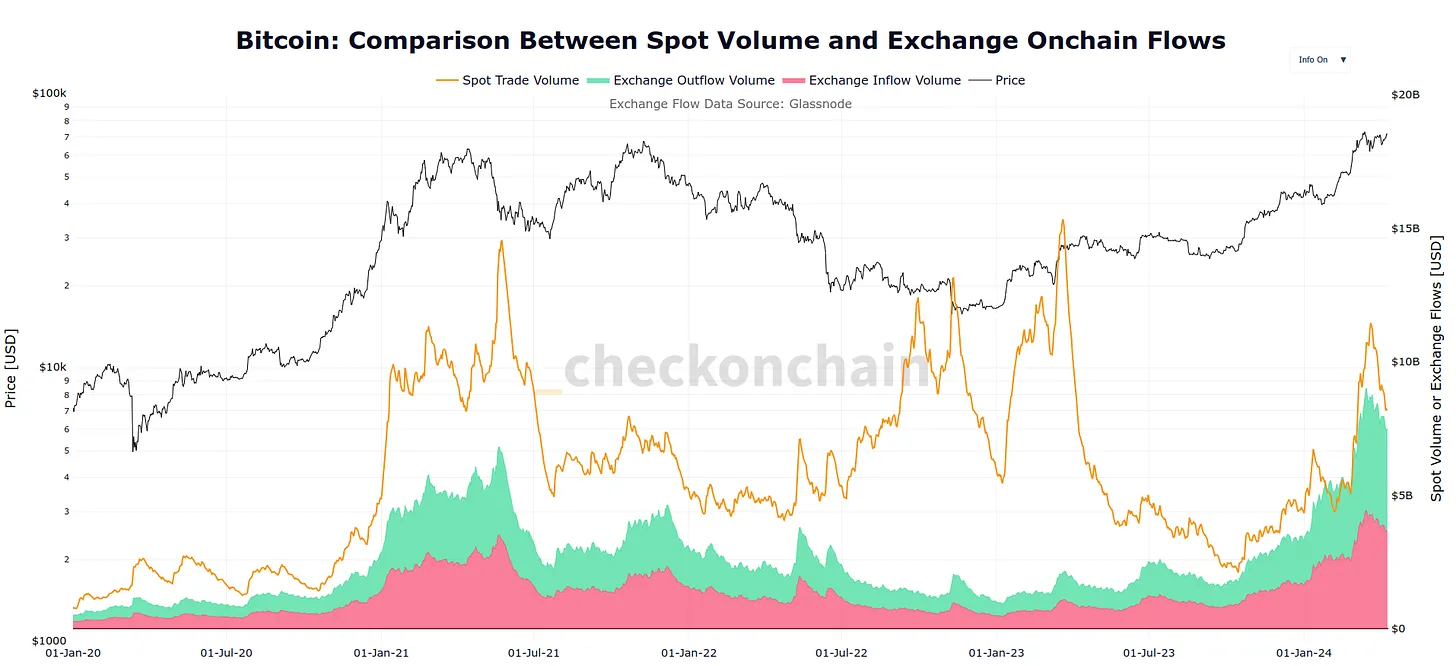
ETF Inflows vs. Exchange Outflows
The correlation between daily ETF net inflows and daily exchange outflows provides a clear view of institutional absorption rates. The table below compares the flow data for the top three spot Bitcoin ETFs, highlighting their role in draining exchange supply.
| ETF Provider | Avg Daily Inflows (BTC) | Avg Daily Exchange Outflows (BTC) | Net Supply Removal |
|---|---|---|---|
| BlackRock (IBIT) | 12,500 | 11,800 | +700 |
| Fidelity (FBTC) | 8,200 | 7,900 | +300 |
| Grayscale (GBTC) | -2,100 | -1,900 | -200 |
Identifying whale accumulation patterns
In the 2026 crypto landscape, the term "smart money" refers to institutional entities and high-net-worth actors whose on-chain activity precedes significant market shifts. Unlike retail speculation, which often reacts to news, these large wallets accumulate positions during periods of low volatility or negative sentiment, signaling confidence in upcoming catalysts such as ETF approvals or regulatory clarity. Tracking these movements requires a focus on data-driven metrics rather than price action alone.
The primary evidence for whale accumulation lies in the divergence between exchange reserves and on-chain valuation metrics. When large wallets withdraw significant amounts of Bitcoin or Ethereum from centralized exchanges, it reduces the available supply for immediate sale, a behavior typical of long-term holders preparing for a bull cycle. Simultaneously, a rising Market Value to Realized Value (MVRV) ratio indicates that the current market price is significantly higher than the average cost basis of all coins, suggesting that early accumulators are moving into profitable territory. This combination of declining exchange reserves and rising MVRV is a strong indicator that smart money is positioning for a major price shift.
To monitor these patterns, analysts track the net flow of assets into and out of "whale wallets"—typically defined as addresses holding more than 1,000 BTC. A sustained period of net outflows from these addresses, coupled with a decrease in exchange inflows, suggests that large holders are moving assets into cold storage, effectively removing them from the market. This reduction in circulating supply can create upward pressure on prices, especially when combined with increased ETF inflows that further absorb available liquidity. By focusing on these on-chain signals, investors can identify accumulation phases before they become apparent in traditional technical analysis.
Analyzing real-time flow signals
Tracking daily ETF flows requires distinguishing between routine market noise and genuine shifts in institutional positioning. In 2026, the primary signal for smart money movement is the net flow data from major spot Bitcoin ETFs, particularly those managed by BlackRock (IBIT) and Fidelity (FBTC). These instruments now serve as the primary conduit for institutional capital, making their daily inflows and outflows a leading indicator for broader market sentiment.
To interpret this data accurately, monitor the relationship between ETF flows and on-chain metrics. When ETF inflows coincide with declining exchange reserves and rising MVRV (Market Value to Realized Value) ratios, it suggests that long-term holders are accumulating assets while short-term traders remain inactive. This divergence often precedes significant price trends. Conversely, large outflows during periods of low volatility may indicate profit-taking by institutional players rather than a loss of confidence.
The current landscape shows that while spot Bitcoin ETF flows weakened earlier in 2026, recent data suggests demand has started to stabilize. This stabilization is critical for identifying whether the market is entering a risk-on phase or merely consolidating. Use the live price widget below to contextualize flow data against real-time price action, ensuring you are not reacting to temporary fluctuations.
What pending approvals mean for liquidity
The regulatory timeline for spot Ethereum and other altcoin ETFs remains the primary variable shaping institutional capital allocation in 2026. While Bitcoin ETFs have stabilized the market's foundational liquidity, the pending approvals for altcoin products introduce a new layer of complexity. Institutional behavior is shifting from pure speculation to structural positioning, anticipating the influx of passive capital that comes with regulatory clarity.
On-chain metrics provide the clearest signal of this transition. Exchange reserves for Ethereum and major altcoins have shown a steady decline, indicating that institutional players are moving assets into cold storage or custody solutions ahead of potential ETF launches. This reduction in circulating supply on exchanges creates a supply shock dynamic, where even modest inflows into new ETF products can drive significant price appreciation due to the scarcity of available tokens.
Market capitalization trends suggest that Bitcoin's dominance may face pressure as altcoin ETFs gain traction. However, this is not a zero-sum game. The entry of large-scale institutional capital often expands the total addressable market for digital assets. As BlackRock, Fidelity, and other major sponsors await final SEC approval for their spot price offerings, the market is pricing in the liquidity event rather than the immediate trade.
The impact on Bitcoin's dominance is nuanced. While altcoin ETFs may draw some capital away from Bitcoin, they also legitimize the broader crypto asset class, driving more institutional interest overall. The key metric to watch is the net flow of assets into these new products. If inflows are substantial, it will validate the institutional thesis that altcoins are a distinct asset class with their own risk-reward profiles, separate from Bitcoin's store-of-value narrative.

No comments yet. Be the first to share your thoughts!