
Why on-chain tracking matters now
The traditional method for assessing institutional demand—waiting for weekly SEC filings—has become a lagging indicator in the 2026 crypto market. By the time a fund reports its holdings, the price action has often already priced in the movement. For traders and analysts monitoring spot Bitcoin and Ethereum ETF flows, this delay creates a blind spot that on-chain data fills in real time.
On-chain tracking provides visibility into the actual movement of assets between exchange wallets and custodial addresses. When large amounts of Bitcoin or Ethereum move from a public exchange to a private custodian, it signals accumulation. When they move back, it suggests preparation for selling. This data is public, immutable, and available instantly, offering a clearer picture of institutional intent than delayed regulatory reports.
The shift toward on-chain visibility is driven by the scale of institutional adoption. As more traditional finance capital enters the crypto space, the volume of transactions has grown too large to track manually. Tools like Coin Metrics and Amberdata now parse blockchain ledgers to identify ETF-related addresses, allowing investors to monitor inflows and outflows as they happen.
This real-time insight changes how market participants react to news. Instead of waiting for a Friday report, traders can adjust positions based on daily on-chain trends. It transforms ETF tracking from a retrospective exercise into a proactive strategy, aligning traditional financial instruments with the speed of digital asset markets.
Reading Bitcoin ETF Custody Flows
Spot Bitcoin ETFs hold their underlying assets in cold storage, managed by major custodians like Coinbase Custody and Fidelity. Tracking the movement of these coins—specifically deposits into and withdrawals from these custodial wallets—provides a high-fidelity signal of institutional demand. Unlike secondary market trading volume, which can be speculative, custodial flows represent actual accumulation or distribution of the asset.
When large amounts of Bitcoin are withdrawn from custodian wallets to private addresses, it often indicates long-term holding or self-custody, signaling strong conviction. Conversely, significant deposits to custodians can precede selling pressure, as assets are moved to exchanges for liquidation. This on-chain data serves as a leading indicator, offering insight into the behavior of large holders before it reflects in price action.
To monitor these flows, investors rely on specialized dashboards such as Dune Analytics, which aggregates data from on-chain sources to track identified custodian addresses. These tools allow for real-time analysis of net inflows and outflows, helping to contextualize price movements against underlying supply dynamics. By correlating this data with market trends, traders can better assess the strength of current market narratives.
Ethereum ETF institutional demand
Institutional appetite for Ethereum ETFs diverges from Bitcoin's narrative by centering on yield and network participation. While Bitcoin ETFs are primarily viewed as digital gold proxies, Ethereum products appeal to investors seeking exposure to the staking ecosystem and the underlying protocol's utility. This distinction drives different flow patterns, with institutional capital often reacting to staking rewards and custody mechanics rather than pure store-of-value dynamics.
Staking-related flows and yield
The integration of staking into ETF structures has created a unique demand signal. When issuers like BlackRock or Fidelity add staking capabilities, they effectively allow ETF shares to accrue yield from the Ethereum network. This feature attracts fixed-income oriented institutional portfolios that previously found pure crypto exposure unpalatable due to zero yield. The flow data often spikes when staking APRs rise or when new staking-enabled products launch, indicating that yield is a primary driver for this specific segment of demand.
Custody address activity
Custody address activity serves as a leading indicator for institutional conviction. Unlike retail trading volume, which can be noisy, large-scale movements into cold storage wallets managed by qualified custodians signal long-term allocation decisions. Monitoring these addresses reveals whether institutions are accumulating for strategic balance sheet exposure or merely trading short-term volatility. A sustained increase in unique custody addresses holding significant ETH balances typically precedes broader price appreciation, as it reflects locked supply rather than speculative float.
Compare Data Providers
Tracking spot Bitcoin and Ethereum ETF flows requires reliable data sources that can bridge traditional finance reporting with on-chain reality. Three platforms stand out for investors monitoring these flows: The Block, Dune, and Coin Metrics. Each offers distinct advantages depending on whether you prioritize ease of access, granular on-chain detail, or institutional-grade precision.
The Block provides a centralized dashboard for Bitcoin ETF data, aggregating fund flows, performance metrics, and approval statuses. It is designed for quick reference, allowing investors to compare fund flows without navigating complex interfaces. While it covers Bitcoin ETFs extensively, its depth on Ethereum ETF specifics is less pronounced compared to specialized on-chain tools.
Dune offers an all-in-one crypto data platform where users can query on-chain deposits and withdrawals linked to ETF custodians. Its strength lies in its community-driven dashboards, such as the widely used "Bitcoin ETF" tracker, which visualizes real-time inflows and outflows directly from the blockchain. This approach provides transparency but requires some familiarity with SQL-like querying or interpreting pre-built visualizations.
Coin Metrics focuses on precision, launching dedicated "ETF On-Chain Insights" to track Bitcoin ETF flows and supply with high accuracy. As institutional adoption accelerates, Coin Metrics caters to those needing rigorous, auditable data for decision-making. It emphasizes the ability to monitor real-time on-chain activity, making it a preferred choice for analysts requiring deep, verified data points.
| Provider | Primary Focus | Asset Coverage | User Interface |
|---|---|---|---|
| The Block | Aggregated ETF Metrics | Bitcoin (Primary), Ethereum (Limited) | Centralized Dashboard |
| Dune | On-Chain Querying | Bitcoin & Ethereum | Community Dashboards |
| Coin Metrics | Institutional Precision | Bitcoin & Ethereum | Specialized Insights |
Reading Net Inflows and Supply Shifts
Spot Bitcoin and Ethereum ETF flows are the primary signal for institutional demand, but raw numbers can be misleading without context. To gauge true market sentiment, you must distinguish between fresh capital entering the market and existing coins moving between custody and exchange.
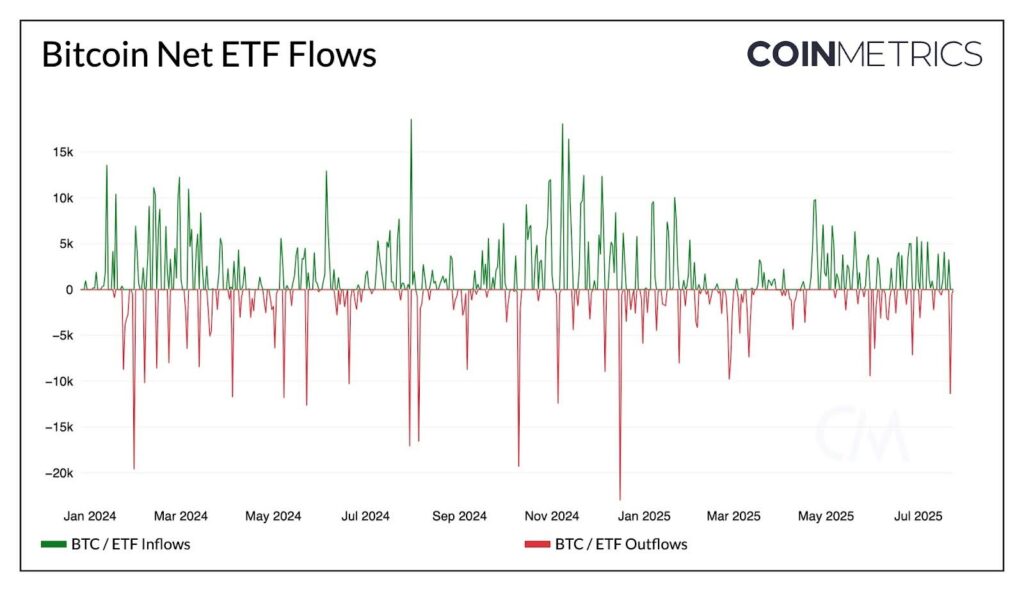
Net inflows indicate new money buying ETF shares, which creates upward pressure on the underlying asset. Outflows suggest profit-taking or risk reduction. Track daily changes across major issuers like BlackRock (IBIT) and Fidelity (FBTC) to identify the dominant trend.
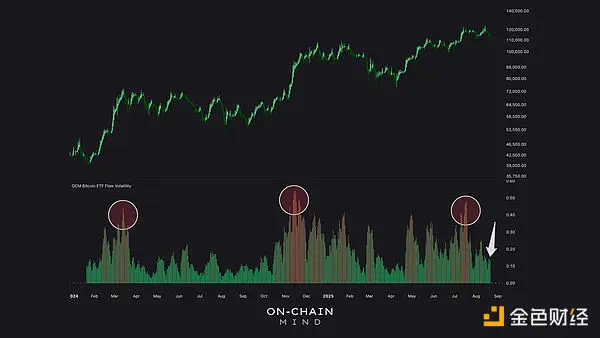
Supply shocks occur when custodians withdraw Bitcoin from cold storage to deliver to exchanges. These withdrawals do not necessarily mean immediate selling, but they increase the liquid supply available on order books. A spike in withdrawals often precedes short-term volatility.

Compare flow data with spot price movements. If prices rise alongside net inflows, the trend is healthy. If prices fall despite inflows, it may indicate weak hands capitulating. Conversely, rising prices with outflows suggest strong underlying demand absorbing the supply.
On-chain transparency is essential for validating these metrics. As noted by industry analysts, building trust through verifiable custody data allows investors to distinguish between speculative noise and actual institutional accumulation.

No comments yet. Be the first to share your thoughts!