
Crypto ETF on-chain data limits to account for
Tracking crypto ETF activity on-chain requires looking past the exchange order book. The primary constraint is that most volume occurs in off-chain settlement layers or through custodial wallets that do not broadcast individual trade details to the public ledger. For the 2026 tracker, this means you are often observing gross inflows to custodians like Coinbase Custody or Fidelity Digital Assets rather than granular retail or institutional trade execution.
This opacity creates a "black box" effect for whale flow analysis. When large entities move assets into ETF structures, the on-chain signal is a single large transfer to a known custodial address. Distinguishing between a long-term strategic allocation and a short-term arbitrage trade is difficult without access to private order flow data. Consequently, on-chain metrics serve as lagging indicators of sentiment rather than leading indicators of price movement.
To mitigate this, analysts often correlate ETF inflow data with stablecoin supply changes on Ethereum and Solana. A spike in USDT or USDC minting often precedes Bitcoin or Ethereum ETF purchases, providing a clearer picture of incoming liquidity. While less precise than direct trade data, this correlation offers a reliable proxy for understanding the true scale of institutional demand in the current regulatory landscape.
Crypto ETF on-chain data choices that change the plan
When evaluating crypto ETFs through an on-chain lens, you are looking past the headline price to see where the actual capital is moving. On-chain metrics reveal the behavior of large holders and the velocity of assets entering or leaving exchanges, offering a clearer picture of market sentiment than price charts alone. However, these tools come with specific limitations that can distort your analysis if you don't account for them.
Liquidity and Volume Discrepancies
Spot crypto ETFs trade on traditional stock exchanges, meaning their primary volume data appears in equity markets, not on the blockchain. On-chain data tracks the underlying spot assets (like Bitcoin or Ethereum) being delivered to custodians. This creates a tradeoff: on-chain volume shows the supply pressure, while exchange volume shows the demand pressure. Relying solely on on-chain data might miss a surge in retail buying on an exchange, leading you to underestimate bullish momentum. Conversely, ignoring on-chain outflows might make you miss institutional accumulation happening off-exchange.
Whale Flow Ambiguity
Tracking "whale" wallets is a common on-chain strategy, but it is fraught with false signals. A large transfer to a cold storage wallet often signals long-term holding, but it could also be a private wallet moving funds for tax purposes or internal portfolio rebalancing. Similarly, deposits to an exchange don't always mean an imminent sell-off; they might be deposits for staking or lending. The tradeoff here is speed versus accuracy. On-chain alerts are instant, but without context from exchange order books or ETF flow reports, they are just noise. You must cross-reference whale movements with actual ETF issuance data to confirm intent.
Custodian and Settlement Lag
Crypto ETFs have a settlement period (typically T+1 or T+2) that on-chain transactions do not. When you see a large on-chain transfer to a custodian like Coinbase Custody, it may not translate into ETF shares being created and sold for several days. This lag means on-chain data often leads price action, but it can also lag in reflecting market corrections if the custodian holds assets without immediate redemption requests. The tradeoff is that on-chain data provides early warning signs, but it lacks the real-time finality of equity market trades.
Data Fragmentation Across Chains
Not all crypto ETFs track assets on a single chain. Bitcoin ETFs track the Bitcoin blockchain, while Ethereum ETFs track Ethereum, and emerging altcoin ETFs might track multiple layers or sidechains. On-chain data tools must be aggregated across these different ecosystems to give a complete view. The tradeoff is complexity. A unified dashboard rarely exists, forcing you to manually correlate data from different explorers and analytics platforms. This fragmentation increases the risk of missing critical data points, such as bridge transfers that move assets between chains before they reach an ETF custodian.
| Metric | On-Chain Data | Equity Market Data | Key Tradeoff |
|---|---|---|---|
| Volume | Asset transfers to custodians | ETF share trading volume | On-chain shows supply; equity shows demand. Missing one gives an incomplete picture of pressure. |
| Whale Activity | Large wallet movements | Block trades and dark pool activity | On-chain movements are ambiguous (holding vs. selling); equity data is often delayed or opaque. |
| Timing | Real-time transfers | T+1 or T+2 settlement | On-chain leads price action but lacks finality; equity data confirms but lags behind initial moves. |
| Scope | Per-chain (BTC, ETH, etc.) | Unified exchange view | On-chain requires multi-platform aggregation; equity data is centralized but may not reflect underlying asset flows. |
Turn on-chain data into a crypto ETF decision framework
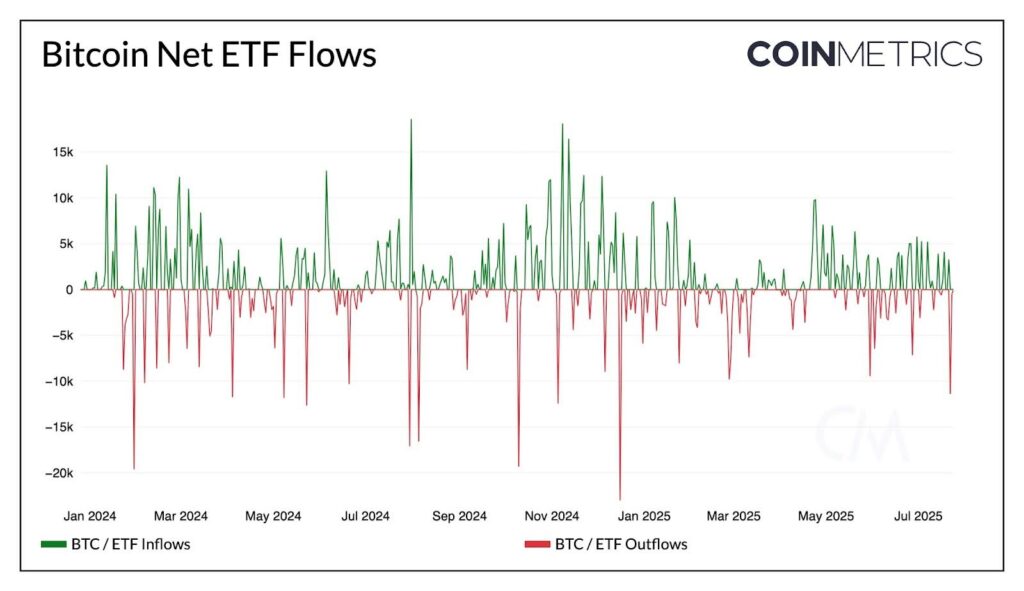
Spot Bitcoin ETF flows weakened earlier in 2026, but recent data suggests demand has started to stabilize. The price drop seems more significant than the volume decline, indicating that institutional investors are accumulating during dips rather than fleeing. To navigate this volatility, you need a practical framework that separates noise from signal.
Start by tracking real-time volume and whale flows using on-chain trackers. These tools reveal where large holders are moving assets, providing early clues about market direction. If you see significant outflows from exchanges, it often signals long-term holding. Conversely, large inflows can indicate impending selling pressure. Use this data to time your entries and exits more precisely.
Next, analyze the impact of new crypto ETFs on price stability. Ethereum ETF price impact analysis across 2026 suggests ETH could reach $7,000–$11,000 if DeFi and real-world asset tokenization continue to grow. This growth trajectory is driven by increased institutional adoption and regulatory clarity. By monitoring these trends, you can identify which assets are poised for significant upside.
Finally, consider which ETFs will boom in 2026. While Bitcoin remains the cornerstone, Ethereum and potentially XRP are expected to see substantial growth. Is XRP going to become an ETF? Regulatory approvals are pending, but the momentum is building. By focusing on these key assets and using on-chain data to guide your decisions, you can position yourself for success in the evolving crypto ETF landscape.
Watch Out for Misleading Claims
The 2026 crypto ETF landscape is crowded with narratives that prioritize hype over on-chain reality. As spot Bitcoin ETF flows have shown volatility, many analysts project aggressive price targets without accounting for the underlying mechanics of institutional custody and daily flow data. Relying solely on price predictions can lead to significant missteps in portfolio allocation.
Weak Options to Avoid
Not all crypto ETF contracts offer the same liquidity or transparency. Some lower-tier funds suffer from wide bid-ask spreads and low daily volume, making them difficult to trade without slippage. Additionally, be wary of ETFs that lack clear exposure to the underlying asset, such as those relying on futures contracts which introduce roll yield risks that can erode long-term returns.
Common Mistakes in Analysis
Investors often mistake short-term whale accumulation for sustained institutional adoption. On-chain trackers reveal that large wallet movements can be deceptive; whales may be rebalancing portfolios or preparing for off-ramp exits rather than signaling a bull run. Always cross-reference whale flow data with exchange reserve levels to distinguish between accumulation and distribution phases.
Crypto ETF on-chain data 2026: what to check next
These answers reflect the current regulatory landscape and on-chain flow trends. For real-time tracking, use the
below to monitor sentiment shifts in the broader crypto equity market.
No comments yet. Be the first to share your thoughts!